What is Niacinamide Serum?
Niacinamide serum is a light skincare product made with Vitamin B3 (Niacinamide). It is very popular for people who have oily skin, acne, or large pores.
You can think of it as a “skin balancer.” It helps control extra oil and makes skin look smooth and clean.
Many people are now searching for the Best Niacinamide Serum in Pakistan because it is simple, effective, and suitable for daily use.
Causes of Enlarged Pores:
Large pores are a common skin problem. They usually appear because of:
- Excess oil on skin
- Dirt and pollution
- Acne and breakouts
- Genetics (family skin type)
- Not cleaning face properly
When oil and dirt build up, pores look bigger and more visible.
How Niacinamide Functions in Skincare?
Niacinamide works in a very simple but powerful way:
- Controls extra oil production
- Tightens and improves pore appearance
- Reduces redness and acne marks
- Improves overall skin texture
It does not work instantly, but with regular use, skin becomes smoother and clearer.
Benefits of Niacinamide Serum
Niacinamide serum has many simple benefits:
1. Reduces Oiliness
It controls extra oil on the skin.
2. Minimizes Pores
It makes pores look smaller over time.
3. Smooth Skin Texture
It improves rough and uneven skin.
4. Reduces Acne Marks
It helps fade post-acne spots.
5. Brightens Skin
It gives a natural, healthy glow.
Which Skin Types Should Use Niacinamide Serum?
Niacinamide serum is suitable for almost everyone:
- Oily skin type
- Acne-prone skin
- Combination skin
- Teenagers and adults
- Men and women both
Yes, men can also use it. In fact, men with oily skin and large pores can benefit a lot from it.
Skincare is not about gender—it is about skin needs.
How to Use Niacinamide Serum?
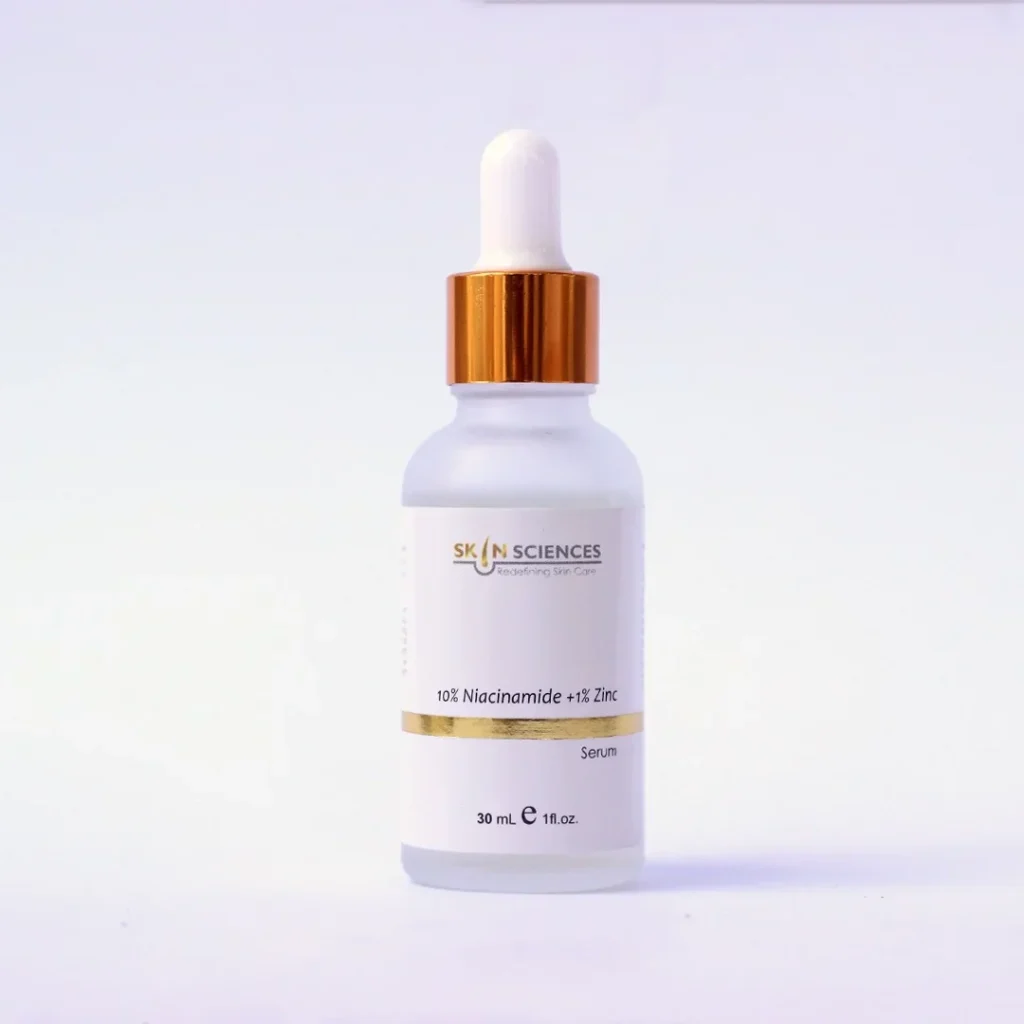
Using it is very easy:
1: Clean Face
Wash your face with a gentle cleanser.
2: Apply Serum
Take 2–3 drops of serum.
3: Spread Gently
Apply evenly on face, especially T-zone.
4: Moisturize
Use a light moisturizer after serum.
5: Sunscreen (Morning)
Always use sunscreen during the day.
When Should You Use It?
You can use niacinamide serum:
- Morning
- Night
It works well in both routines. Most people prefer using it twice daily for better results.
Reasons Dermatologists Recommend Niacinamide
Dermatologists (skin experts) often recommend niacinamide because it is gentle and very effective for oily and acne-prone skin.
According to dermatologists, niacinamide helps because it:
- Controls oil without drying the skin
- Reduces pore size appearance
- Strengthens skin barrier
- Helps calm acne and redness
Experts also say it is one of the safest skincare ingredients for daily use.
That is why many dermatologists suggest using trusted skincare products like Skin Sciences, which are designed with gentle formulas suitable for oily and sensitive skin types.
How Long Does It Take to Show Results?
Niacinamide serum needs time to show visible effects:
- 1 week -Skin feels less oily
- 2–3 weeks – Pores look smaller
- 4–6 weeks – Skin becomes smoother
Consistency is very important for best results.
Common Mistakes People Make
Many people do not get results because of mistakes like:
- Using too much serum
- Skipping sunscreen
- Not using it regularly
- Mixing too many strong products
Simple and consistent use works best.
Simple Tips for Better Results
To get clear and smooth skin:
- Wash face twice daily
- Drink enough water
- Avoid touching face too much
- Use sunscreen daily
- Eat healthy food
Healthy habits improve skincare results.
Final Words
Large pores and oily skin are common problems, but they can be managed with the right skincare routine.
Niacinamide serum is one of the best solutions because it controls oil, reduces pores, and improves skin texture in a gentle way.
Both men and women can use it easily in their daily routine. Dermatologists also recommend it because it is safe, effective, and suitable for long-term use.
Leave a Reply